Cloud Fellows SSH Gateway
Security policy that understands SSH applications
Move beyond connection-level controls. Inspect and govern Shell, Command, SCP, SFTP, Git and tunnels through an application-aware SSH proxy.
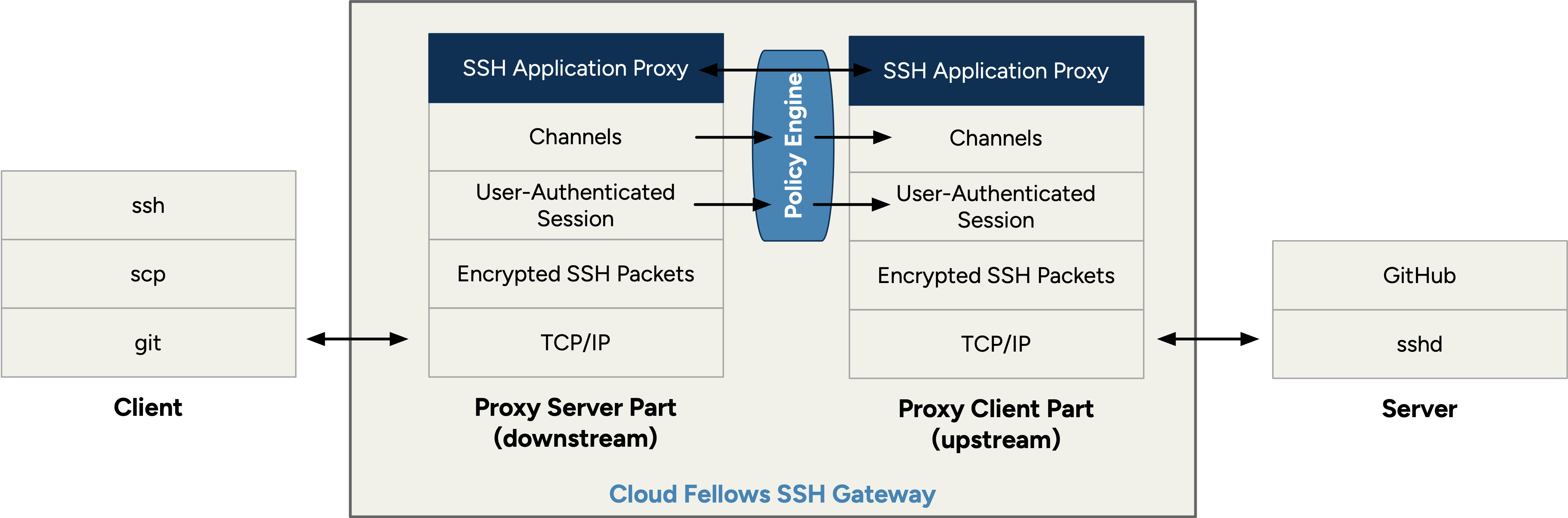
Understand the application inside SSH
SSH Gateway terminates both sides of a connection and presents application-level events and content to one flexible policy layer.
Application-aware controls
Sessions, commands and files
Apply policy to what users actually do, not only where they connect.
Control access and authentication, inspect remote commands, and govern files transferred through SCP, SFTP and Git. Policies can allow, block, hold or modify traffic at the relevant application stage.
Tunnels and channels
Visibility beyond the login
SSH can carry much more than an interactive shell.
Understand SSH channels and apply policy to forward and reverse TCP tunnels as well as application sessions. This helps prevent an approved SSH connection from becoming an uncontrolled path around security architecture.
Policy and evidence
Controls you can explain
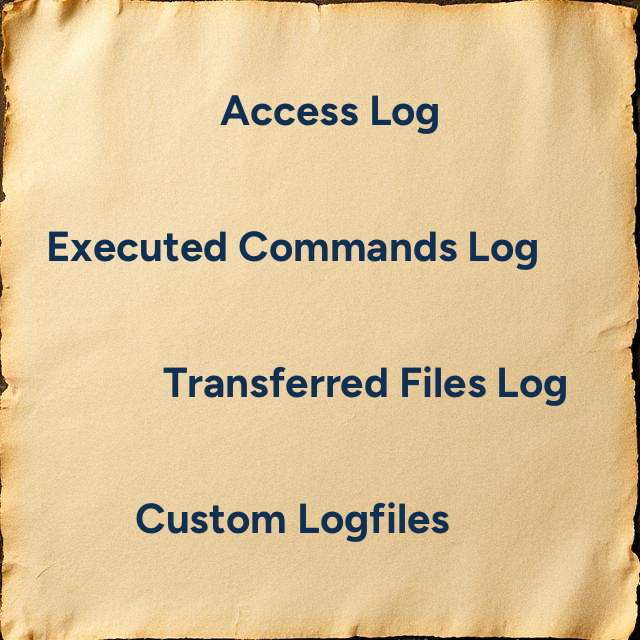
Create policy-controlled logs with standard and custom fields for the context your product and customers need.
Flexible triggers let integrations focus on relevant stages of the SSH workflow. Decisions and application context can be carried into access logs, dedicated policy logs and product-specific reporting.
Product and OEM integration
Built to become part of your security solution
A compact, asynchronous implementation with minimal external dependencies.
Use SSH Gateway as a standalone component or integrate it into an SSE or security-gateway product. Cloud Fellows can support architecture, policy-engine integration, product adaptation and delivery on the partner's technology stack.
Explore engineering services
Take the next step
Review the technical overview, read the launch announcement or discuss an evaluation and integration use case.